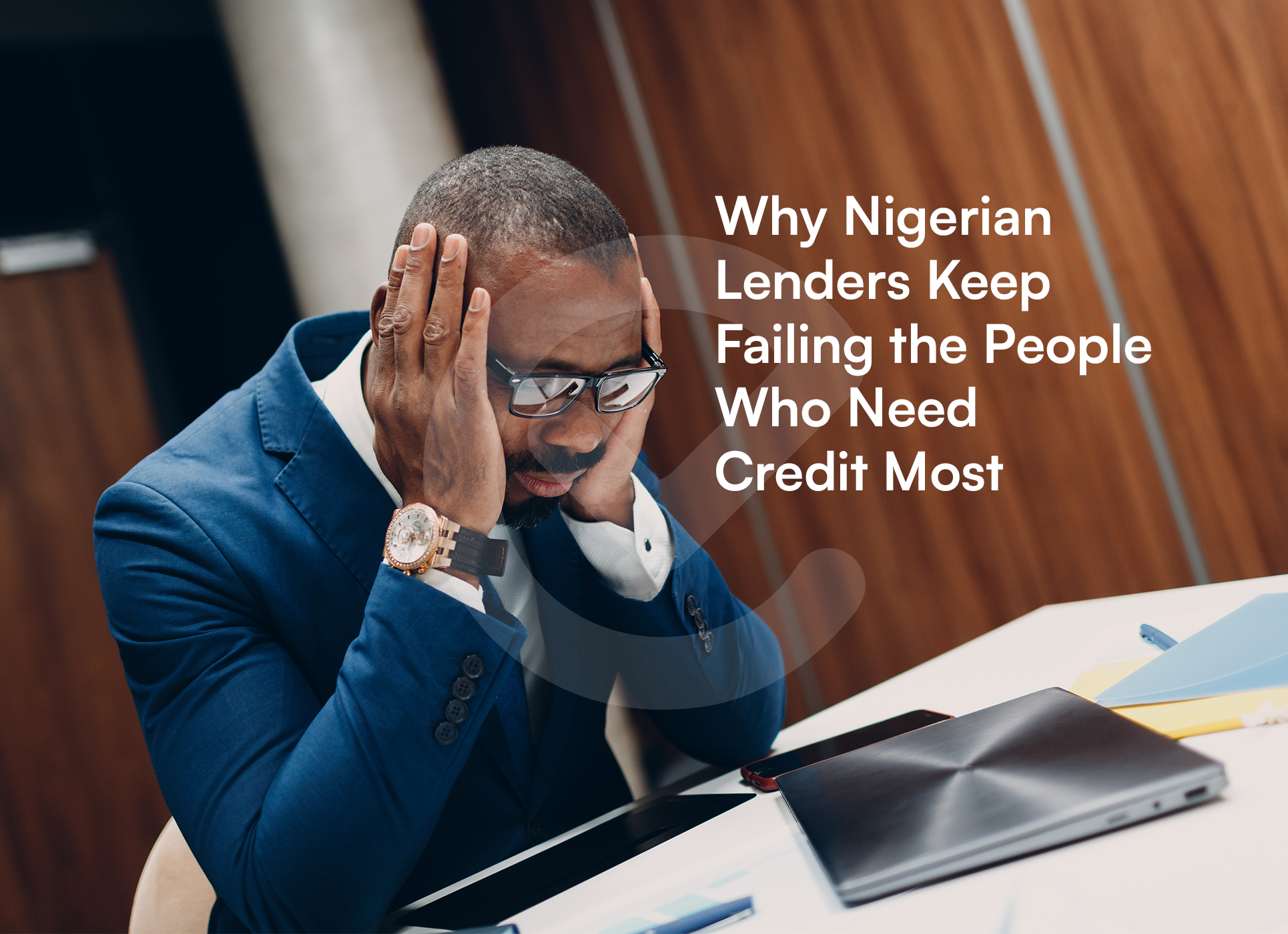
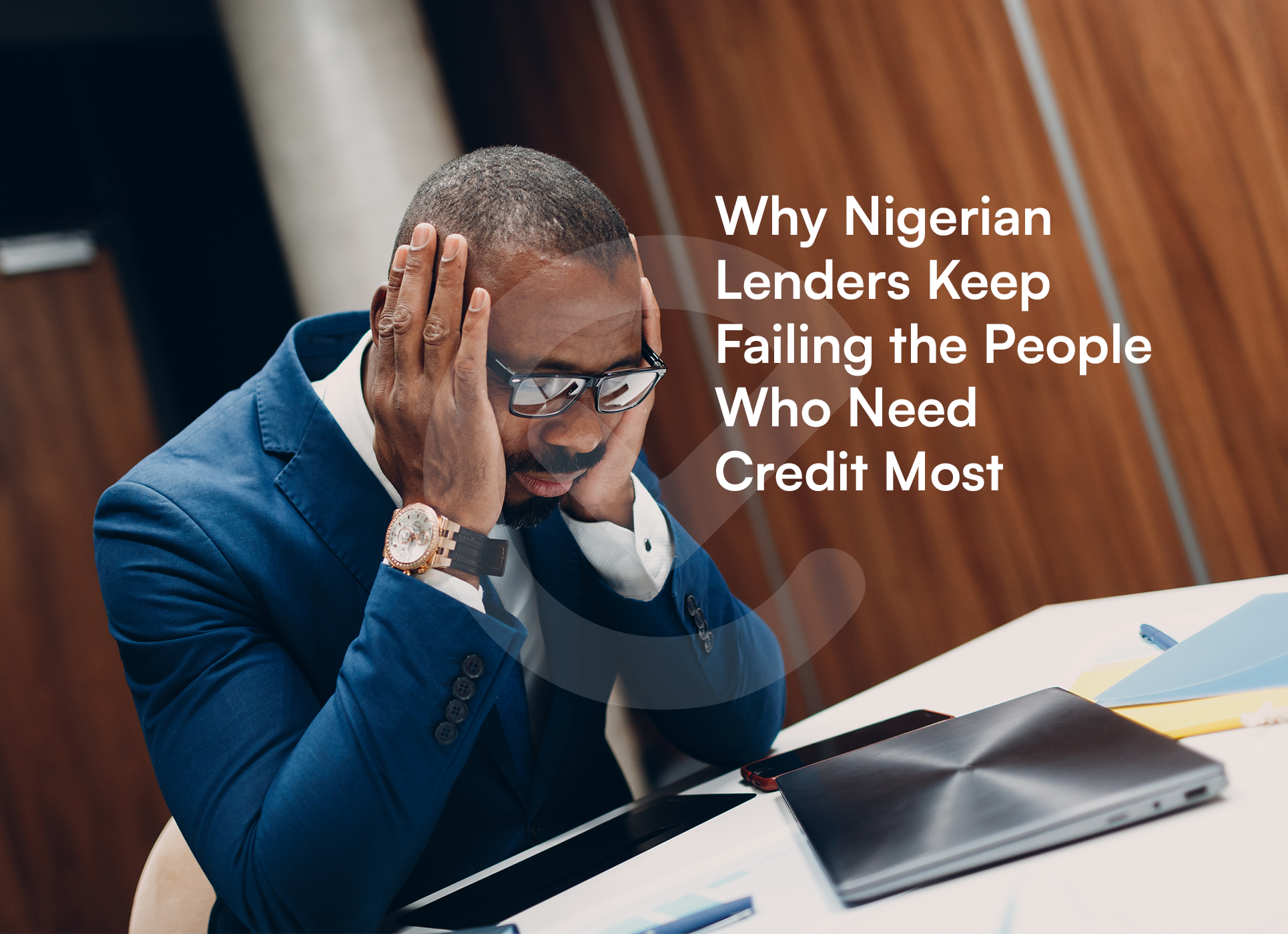
Why Nigerian Lenders Keep Failing the People Who Need Credit Most
It means repayment structures that reflect how Nigerians actually earn.
Published
21 May 2026
Written by
Princess
There are over 39 million MSMEs in Nigeria. They employ roughly 80% of the workforce and contribute nearly half of the country’s GDP. And yet, fewer than 5% of them have ever accessed formal credit.
Let that sit for a moment.
Not because they don’t need it. Not because they wouldn’t pay it back. But because the system, as it was designed, was never really built for them.
That’s not an accident. It’s a failure. And it’s time we talked about it honestly.
The System Was Built for Someone Else
Nigeria’s formal credit infrastructure was largely inherited from models designed for salaried, documented, urban professionals with provable income streams and collateral to back their borrowing. Banks want payslips. They want title documents. They want three years of audited accounts.
For a trader in Onitsha Market who turns over ₦2 million a month in cash, none of that exists, not in the format the system recognises. For a logistics entrepreneur whose entire business runs through WhatsApp orders and mobile transfers, the paper trail looks like nothing to a credit officer trained to see only paper.
The borrower isn’t the problem. The framework is.
Speed Became a Distraction
When digital lending exploded in Nigeria, it felt like a revolution. Apps promised loans in minutes. No collateral. No paperwork. Just a BVN and a phone number.
And it was exciting, because for millions of Nigerians, it was the first time a financial product had ever said yes to them.
But speed without structure isn’t inclusion. It’s exposure.
What followed, for many lenders and many borrowers, was a cycle that’s now well documented: high-interest products that ate into margins before the business could breathe, aggressive recovery tactics that damaged trust, and default rates that caused lenders to quietly tighten their criteria again, locking out the very people they claimed to serve.
Fast wasn’t the solution. It was just the most obvious thing to optimise for.
Risk Wasn’t Measured. It Was Assumed
Here’s the uncomfortable truth that most lenders won’t say out loud: a lot of credit
decisions in Nigeria are still driven by proxies rather than evidence.
If you don’t have a salary account with a tier-1 bank, you’re considered higher risk, not because your repayment behaviour has been assessed, but because the system has no clean way to assess it. So it defaults to exclusion.
That’s not risk management. That’s pattern-matching dressed up as underwriting.
The MSME owner who has paid her suppliers on time for six years, who has a Moniepoint transaction history that tells a clear story of consistent revenue, who has never defaulted on a supplier credit, she exists in the data. But if that data isn’t being read intelligently, she stays invisible.
Responsible lending isn’t about lending to the safest people. It’s about building the tools to accurately understand who safe actually is.
What Responsible Lending Actually Looks Like
It starts with better questions. Not just “can this person pay us back?” but “what does
their financial behaviour actually tell us?” across mobile money flows, utility
payments, trade credit history, and platform transaction data.
It means repayment structures that reflect how Nigerians actually earn. A market trader
doesn’t receive a salary on the 28th. Her income is daily, seasonal, sometimes lumpy.
A loan product with a rigid monthly repayment schedule isn’t built for her, it’s built for someone else and handed to her anyway. It means treating sustainability as a success metric. Not just approval rates. Not just disbursement volume. But: are the people we lent to better off? Did the credit enable something, or did it just postpone a problem and add interest?
That last question is the one the industry has been slowest to answer.
Why This Matters Now
Nigeria’s credit gap isn’t shrinking fast enough. CBN data, SMEDAN reports, and independent fintech research all point to the same reality: demand for credit is enormous, trust in credit systems is fragile, and the mismatch between how products are built and how real Nigerians live is still wide.
The lenders who will win the next decade aren’t the ones who approve the most loans.
They’re the ones who build the most accurate picture of who deserves one and then actually serve them well.
At EazyCredit, that’s the problem we’ve decided to work on. Not because it’s easy.
Because it’s the one that matters.
EazyCredit offers personal loans, salary advances, business financing, and education loans designed around how Nigerians actually live and earn.
Ready to apply?
Get a Loan in Minutes
Fast approval, transparent rates, no hidden fees. Fill out our simple form and get funded today.
Apply now